

From Oberlin to Pro: How Yuuki Okubo Launched His Professional Basketball Career in Japan
Listen to Yuuki’s episode of the Student Athlete Sessions (Apple Podcasts)
Most people who doubted Yuuki Okubo never told him to his face. They left comments. YouTube comments and Instagram comments from strangers with opinions about a kid from LA they'd never met, had never watched up close, and certainly had never played against.
Okubo saw them. And then he went and pursued his dream anyway.
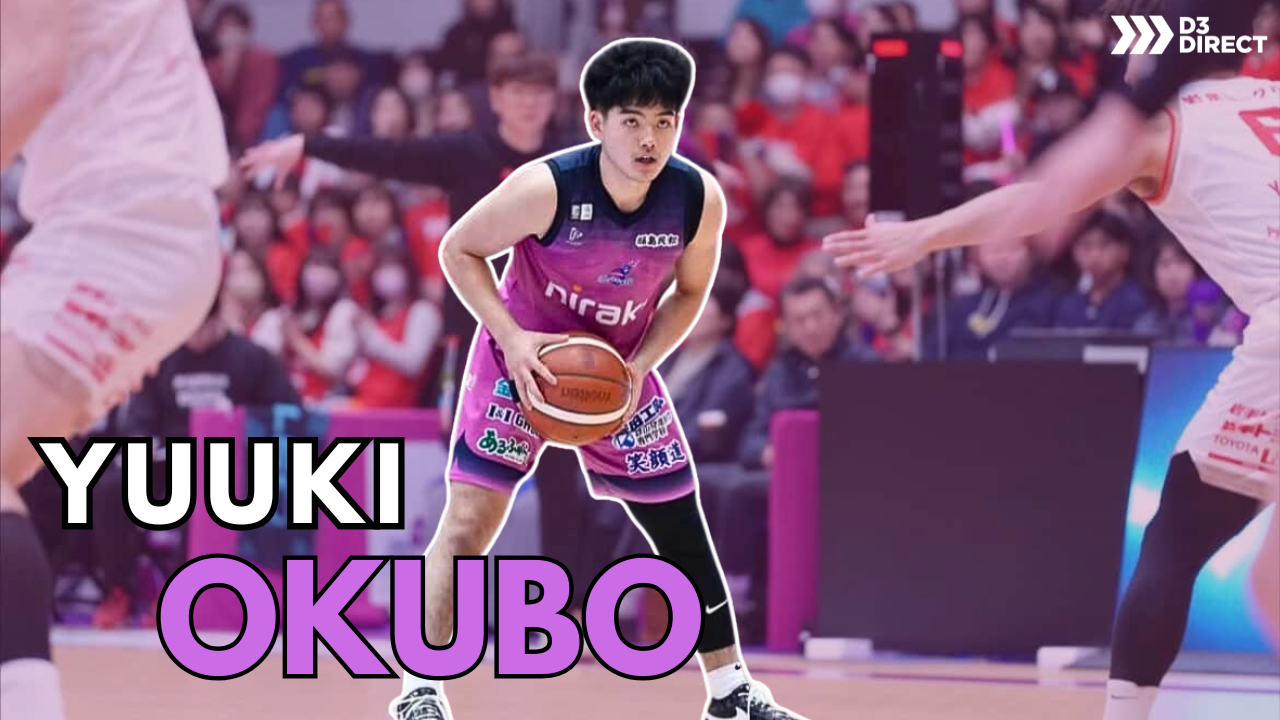
The former Oberlin College point guard is now a professional basketball player in Japan's B-League, suiting up for the Fukushima Firebonds. He recently joined the Student Athlete Sessions to talk about the recruiting process that got him to Ohio, the chip on his shoulder that kept him going, and what it actually feels like when a dream you've carried since middle school finally becomes your job.
The Kid Nobody Recruited
Growing up in Los Angeles, Okubo attended Crossroads High School — a team loaded with Division I talent. He was in elite company. But when it came time to think about his own next level, the phone wasn't exactly ringing off the hook.
"I wasn't really highly recruited, like, at all," he said. "My senior year, I started getting some D3 interests, and I knew that was personally the best path for me."
He knew two things early: he wanted to play in Japan eventually, and he wanted a serious education. Oberlin, a highly selective liberal arts school in Ohio, checked both boxes. But getting there required him to take matters into his own hands.
"I was just reaching out to schools, sending emails, sending probably hundreds of emails. And Oberlin was one of the few schools that reached back to me and was like, 'Hey, we actually watched you play, we'd love to take this another step.'"
That response came after an assistant coach spotted him at the Section 7 showcase in Arizona the summer before his senior year. From that first contact to an official visit (navigated in the middle of COVID) Okubo pieced together his own path to college, unsolicited offer by unsolicited offer.
His message to any recruit in a similar position: "You have to be proactive, and you have to start reaching out yourself if you're not highly recruited."
What Drew Him to Oberlin
The on-campus visit to Oberlin College itself was unusual. COVID had scrambled everything, and Okubo wasn't getting the full college tour experience. But something about the school clicked anyway.
A former middle school teammate was already on campus and showed him around. And Okubo — a kid who'd grown up in the controlled chaos of Los Angeles — found the quiet disarming.
"Ohio, in general, is just such a different state than Cali. It was just so peaceful, it was slow-paced. LA is just such a fast, fast-paced, just hectic city, and Oberlin — I could just really slow down, lock in, and just live low-key. And I feel like that's what I was drawn to."
Building Something From the Bottom
Okubo arrived at a program in transition. Post-COVID, Oberlin Men’s Basketball returned just one or two players. His freshman year, they went 6-18. Then came a coaching change.
Losing the staff that recruited him was hard. "It was really hard, just knowing that the guys that gave me an opportunity are gone." But the new coaches — Shiva [Senthil] and Nate — brought something the program had been missing.
"They honestly just changed the culture. They changed the belief inside. Before, it was like, 'Damn, Oberlin basketball — oh, if we lose, oh well.' But now it's like, we're supposed to be winning. If we lose, it's like, damn, like, we shouldn't be losing like this."
By Okubo's junior and senior years, the Yeomen were close to .500 and earning respect across the NCAC. He became the program's all-time assists leader with 510 career dimes, a multi-time all-conference honoree, and a centerpiece of the team's rise. But he's more proud of the shift in identity than any individual stat.
"If you play Oberlin, it's not an easy win. It's not an upset — we're not the underdogs like that anymore. Being able to be a part of that change was just a memorable experience for sure."
The Dream He Never Stopped Believing In
At 5'8" and 145 pounds, Yuuki Okubo does not look like anyone's idea of a professional basketball player. People have been telling him that since he was in middle school.
"Everyone was telling me, yeah, you're probably not making varsity, whatever. And I made varsity. I was starting some games."
The doubters kept coming at every level. High school. College. Even the prospect of going pro from the NCAA D3 level. And every time, Okubo used it as fuel.
"In high school, there were just so many YouTube comments, just Instagram comments, just people hating. At first, yeah, it was getting to me. But then you just realized, like, they haven't been in the shoes that we have. So, like, how can they really tell us? Just using that as fuel to your fire."
His path to Japan had a hidden advantage: He's a Japanese citizen. In the B-League, teams are only allowed three foreign contracts (called “Imports”) reserved for ex-NBA players and high-level international talent. By entering the league as a local, Okubo wasn't competing in that pool at all.
"I always knew that since I have my Japanese passport, I am a Japanese citizen, and I can play as a local. I feel 100% I could compete with that, and I feel like it'd be dope to just live in my home country that I've never lived in. That was just always a dream — and a realistic dream that I could always pursue."
Hundreds of Cold Emails, Revised
Getting to Japan didn't happen by accident — it followed the same playbook Okubo used to get to Oberlin. Start early, build relationships, and get in the room.
Starting around his sophomore year, he stayed in quiet contact with Japanese agents. He didn't push it, but he kept the door open. After his senior year, a former trainer in L.A. connected him with the agent he has now. And instead of just signing whatever came his way, Okubo used his spring break to fly to Japan and take visits with teams — just like a high school recruit.
"That was, like, one of the best things I did. I honestly didn't want to, because I had planned a Europe trip with my senior boys. But I was like, for my career, my future, this is something I had to do."
He toured facilities. Talked to GMs and players. Got a feel for how the league actually operated before he committed to anything. Shortly after, his agent connected him with the Fukushima Firebonds' management, the conversation went well, and a deal got done.
"It was hard, but it was honestly pretty simple. A simple process."
His advice for any D3 player dreaming of playing overseas: "Go out there if you can, see how it is, really make connections. Connections are just the most important thing in pro sports."
Life in Fukushima, Japan
Okubo landed in Japan in July and is still getting settled. His Japanese is still a work in progress, but so far has made daily life easier than it might have been. The biggest cultural adjustment, he admitted with a laugh, has been the trash rules.
"Every day is a different type of trash. Tuesdays and Wednesdays are trash you can burn. Thursdays, recycle — but you have to take off the caps and labels of the plastic bottles, and those go in separate trash cans. I have, like, 3 trash cans in my kitchen right now. At first I'm like, damn, what are we doing here? But you get used to it."
On a rookie local contract, Okubo found his own apartment, handled his own logistics, and leaned on his parents to navigate the paperwork his Japanese couldn't cover yet. It's a different reality than the foreign imports, who receive housing and a car as part of their deals. But Okubo doesn't complain.
"I really can't complain about anything. I feel like I'm living the dream life. I just have to play basketball — I don't have any class, I don't have homework. I just play basketball, recover, and in my free time, I'm just chillin'."
Learning to Be a Pro
At Oberlin, Okubo was the engine. He averaged over 30 minutes a game for his career, controlled the offense, and made every decision with the ball in his hands. In Fukushima, he's playing 10 to 20 minutes off the bench, alongside ex-NBA players who've been doing this for years.
The adjustment hasn't been just about basketball — it's been about how to take care of a body that has to compete twice a weekend, every weekend.
"In the beginning, I was just learning how to be a pro. Take recovery days, go hard when you need to go hard — but when you need to rest, you rest. We have 30, 32, 34-year-olds on our team that need a little bit more recovery. Just learning from them and seeing what they do, and being like, damn, I'm still young, I can still do this — but it is important to take all of these pre-game, post-game recovery steps."
He admitted he barely touched Oberlin's training room during his college years. That changed the moment he saw what the veterans around him were doing.
On the court, he's embraced the smaller role with the same mindset he's always carried. "Whenever I'm in, I'm just going all out. I don't have to conserve my energy. When my name gets called — just be ready and take that opportunity and just go with it."
What He'd Tell His 18-Year-Old Self
When asked the question D3direct puts to every guest, Okubo didn't reach for a highlight. He reached for something quieter.
"I would tell them that the journey's long, and don't get tripped up over little things, little obstacles that you're gonna face. There's just gonna be so many learning curves that you're gonna get hit with. But at the end of the day, in the long run, all those little obstacles aren't gonna matter if you just keep going."
He still tells himself the same thing. Almost every day.
"There's gonna be bad days. There's gonna be learning curves. But you just gotta keep going. Take the hits and just keep going."
Yuuki Okubo plays for the Fukushima Firebonds in Japan's B-League. Follow him on Instagram at @_ywk1. Games are streamed on Basket Live (VPN required from the US). Listen to his full conversation on the Student Athlete Sessions podcast on Spotify, Apple Podcasts, or wherever you get your podcasts.