

An inside look at Hope Women’s Basketball with Coaches Brian Morehouse & Courtney Kust
👋 Welcome back to the D3Direct Newsletter, the go-to source for reliable D3 college recruiting & admissions information.
Today, we take an inside look at one of the most successful D3 sports programs of all time - Hope College Women’s Basketball - with help from two of their coaches: Head Coach Brian Morehouse and Assoc. Head Coach Courtney Kust.
Listen to the podcast (Apple Podcasts)
Not a subscriber yet? Sign up free today!
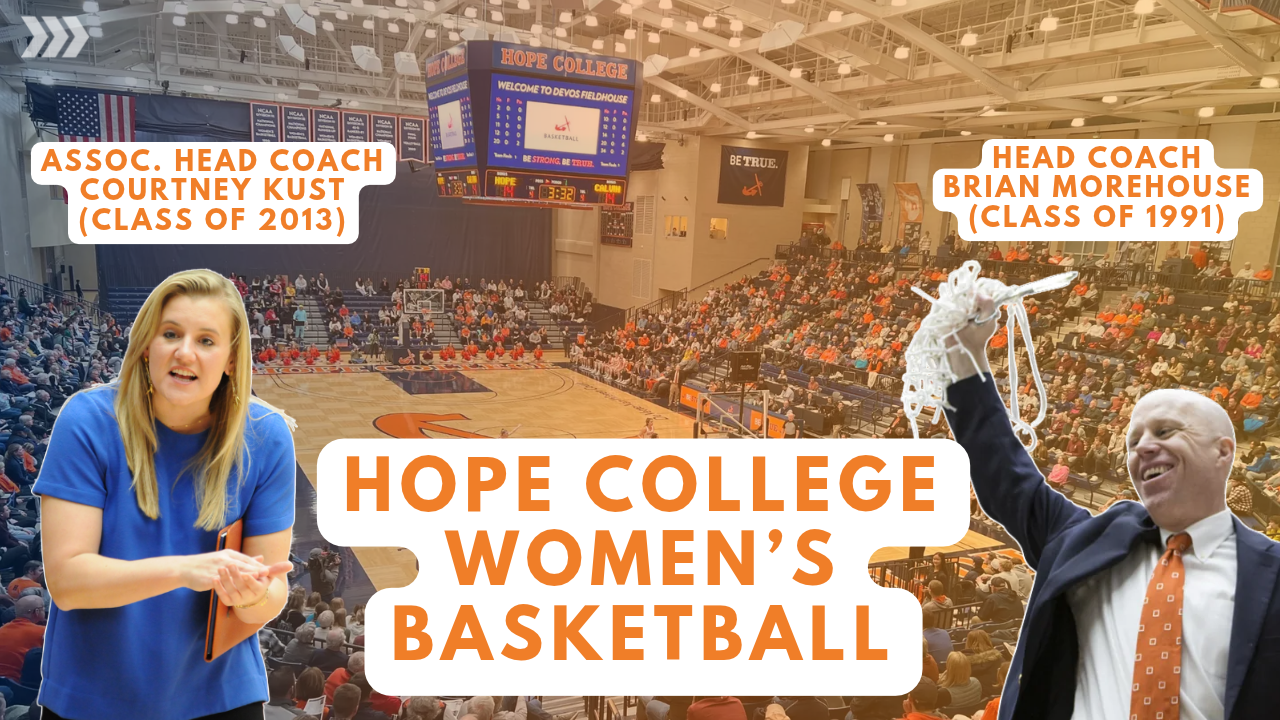
An Inside Look at Hope College WBB
We caught up with the leaders of Hope WBB (ranked #4 in the country) fresh off a 2-0 opening weekend at their Hope tournament that included a Top 25 win over Illinois Wesleyan University.
Coach Brian Morehouse has coached the Flying Dutch for three decades and has 760 wins, one of the best records in college basketball at any level. Courtney Kust played for him, captained the flying dutch, and now runs much of the program’s culture work as his associate head coach.
See where Coach Morehouse landed in our ranking of the Top 25 active coaches in D3 Women’s Sports
Takeaways for D3 Recruits
1. Recruiting timelines are moving earlier, even in D3
D3 classes now fill sooner because of a trickle-down effect from D1 and D2. Coach Morehouse said fewer spots are open at those levels, partly because of the new five-year eligibility rules, so players rush to commit and avoid being “the leftovers.”
Hope now starts recruiting players earlier, and players decide earlier. The 2027 class is mostly done, though the staff still has room for a couple more players who fit their team culture.
What recruits should do: If you are a junior, start real conversations with D3 coaches now. Do not assume a D3 team will wait until spring of senior year to start recruiting.
2. Roster size tells you how much a program values each spot
Hope carries only 16 players, which Morehouse called unusual in Division III. Some schools are tuition-driven and add roster spots to boost enrollment. Hope has an admissions waiting list, so it does not face that pressure.
The result: “When a player gets an offer from us… they know that they’re a part of a relatively small circle,” Morehouse said.
What recruits should do: Ask every program how many players it carries and how many it plans to add in your class. A 25-player roster will give you a very different experience from a 16-player one.
3. Fit beats height
Morehouse played down the idea that Hope just finds “6-footer after 6-footer.” The staff looks hard at family dynamics, values, and conversations with high school coaches. This year Hope landed a recruit whose whole high school would fit in one of its lecture halls.
“I don’t think that every player is a good fit for Hope,” he said. “That’s the beauty of young people having a choice.”
4. The 8 a.m. test and the charge test
Both coaches identified moments that moved a recruit up their board this year:
Morehouse watches early-morning warm-ups. He shows up at 7:30 for 8 a.m. games. “A lot of people can be resilient at 2:30 in the afternoon. I don’t think every young person has resilience at 8:30 in the morning.”
Kust watches for charges. “No one takes a charge in the summer.” A current Hope sophomore stood out by taking a couple in one summer game, and she has played that way ever since.
Both watch how players compete when the score is lopsided, and whether they lift teammates with energy and high-fives.
Morehouse added a caveat: energy alone is not enough. You still have to make shots, keep up, and handle the ball. Translation: D3 Basketball is high-level basketball!
5. Be strategic about AAU events
There used to be a few summer events. Now there is one almost every weekend from March on. Coach Morehouse goes where his top targets will be and watches livestreams for one-hour looks at a single player he can’t see in person.
He also advised recruits and parents to question AAU schedules that send Midwest players to New Orleans, Las Vegas, and Phoenix. “Is that really an effective use of your money?”
And if a coach skips an event for a family commitment, do not take it personally. “If they don’t respect that, they probably aren’t a great fit for us,” he said. Hope wants players to grow in four or five areas of life, and the coaches try to model that balance.
What recruits should do: Tell coaches where you will play, then pick events in the region where you want to go to school. Get the most out of your time and money spent by communicating actively - and don’t take it personally if a coach doesn’t come to one tournament. They’re resource constrained at the D3 level.
6. Culture is daily work, backed by data
Hope pairs hard data with soft skills. Players wear heart-rate monitors, and a local physical therapist runs force-plate testing to guide lifting and recovery. Student assistant coaches track weekly points of emphasis, with goals set by position.
The staff also spends five to seven minutes on culture every practice, built around four core values: respect, resilience, compete, and joy. In November, each player hosts a “Number Day” on the date that matches her jersey number. Every fall, the team takes a retreat at the Morehouse family lake house, a tradition that dates to about 2003.
Why it matters for recruits: Morehouse said corrections land better when players already know the standard. “They know it’s out of love… as opposed to this anger and demeaning piece that we certainly don’t want any part of our program.”
7. Ask better questions on your visits
Morehouse’s advice to his 18-year-old self: ask deeper follow-up questions.
Instead of “How’s your culture?” ask “Why is your culture great?”
Instead of “Do athletes miss class?” ask “What’s the team GPA, what do players major in, and why are they successful?”
He also said to keep a notebook of every visit: what you liked and what you didn’t.
8. Then trust your gut
Coach Kust did not commit to Hope until April of her senior year. She first saw the program while her older sister was being recruited, and she remembers watching the team sprint to the bench during an NCAA timeout. “They looked like they were each other’s best friends.”
Her advice to her younger self: trust your gut and the values your parents gave you. Kust also reminded families that a 16- or 17-year-old is making the biggest decision of their life so far. “Where they’re going to spend the next 4 years… will ultimately shape their next 40 years.”
Morehouse put it this way: “At some point, you gotta pull the trigger… Sometimes it is a feeling, and that’s okay.”
Listen and Next Steps
Morehouse closed with the point of the whole episode: “We want young people to make great decisions and be happy, wherever they might go.”
Listen to the full episode of the Student Athlete Sessions with Brian Morehouse and Courtney Kust
Follow Hope’s season as the Flying Dutch chase another deep NCAA run: Hope WBB schedule
Need help building your college list, recruiting timeline, or visit questions? D3Direct works 1:1 with families on D3 recruiting, admissions, and financial aid (Learn more)
Who should we interview next? Many of our guests come from listener suggestions. Reply to this email with your pick.
Episode FAQ
When do D3 women's basketball programs finish recruiting a class? Earlier than they used to. At Hope College, most of the 2027 class was committed by November 2026. Head coach Brian Morehouse says D1 and D2 roster crunches are pushing commitments earlier at every level.
How many players are on a D3 women's basketball roster? It varies widely. Hope College carries 16 players. Some D3 schools carry more because extra roster spots help with tuition revenue, so ask each program directly.
What do D3 coaches look for besides talent? Hope's coaches look for fit with the school's values, family dynamics, and competitiveness. They watch whether players bring energy to early-morning games, take charges, and compete hard when the score is lopsided.
Do I need to play in national AAU events to get recruited by D3 schools? Not necessarily. Morehouse recommends playing events in the region where you want to go to school, telling coaches your schedule, and remembering that coaches also scout through livestreams.
What questions should I ask a college coach on a visit? Ask why the culture is strong, not just whether it is. Ask about the team's GPA, players' majors, and how athletes succeed in class. Keep notes on every visit.
Does Hope College offer athletic scholarships? No. Hope is NCAA Division III, and D3 schools do not award athletic scholarships. Families should look at merit and need-based aid instead.