

Carly Assimon - The Head Coach of Vassar Women's Basketball
On Patterns, Honesty, D3 Roster Spots, and what D3 Coaches Look for in Recruits
D3 coaches don't judge recruits on one game.
Vassar College women's basketball head coach Carly Assimon says she looks for patterns: how you react to mistakes, how you treat teammates, how consistent your attitude is, and how quickly you respond when she reaches out. A former Clarkson guard, Assimon was hired at Vassar on September 30, 2025, just a month before her first season, and led the team to a fifth-seed finish in the Liberty League tournament.
In Coach Assimon’s episode of the Student Athlete Sessions podcast, she explains what she tells recruits who think they played badly in front of a coach, why she is upfront about roster needs and timelines, and how an injury and a COVID-shortened career pushed her into coaching.
Watch the episode on our Youtube Channel or listen on Spotify.
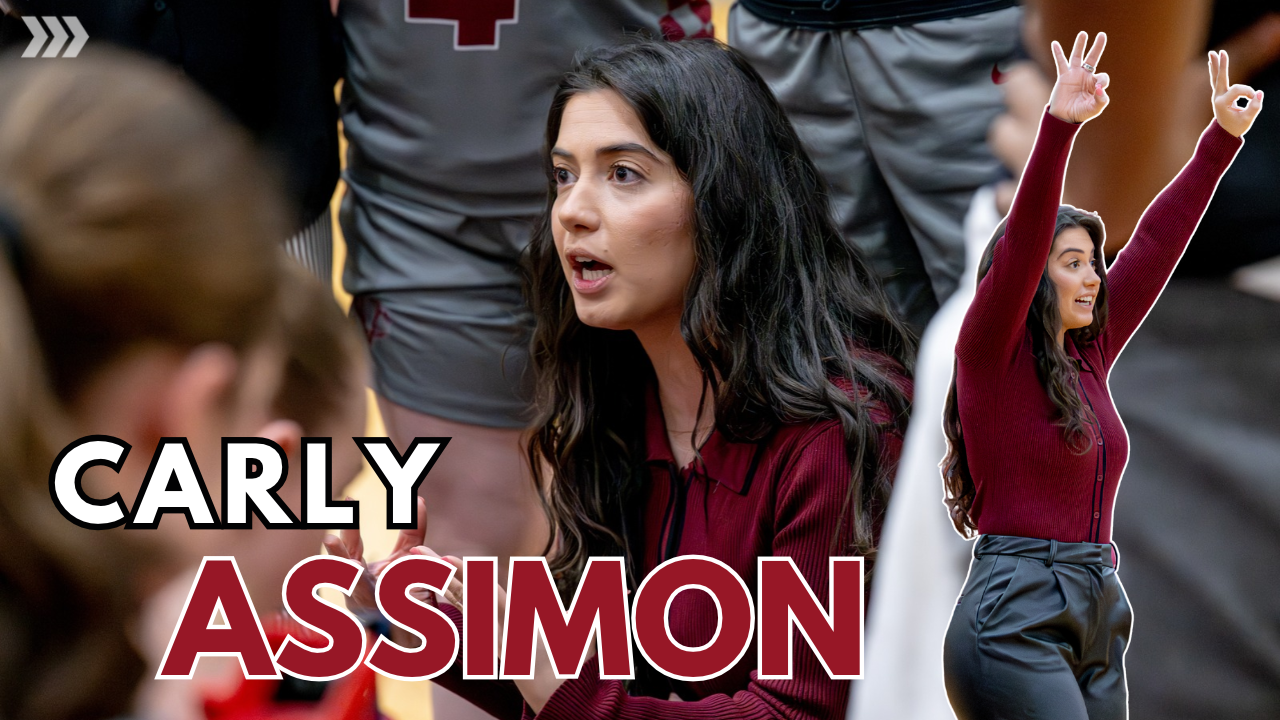
Images via Vassar Athletics (Steven Merritt)
How Did Carly Assimon Get Recruited to Clarkson?
Assimon wasn't playing a lot on the AAU or travel team circuit. Her high school team had its own travel program, coached by her dad and her best friend's dad, and she played with it from sixth grade through her sophomore year of high school. When she realized she needed more college exposure, she joined a different AAU team for her junior year, and she did a lot of academic elite camps, where many high-academic D3 schools recruit.
Wondering how to determine which D3 and recruiting camps are worth it? Check out this article.
Her mom helped her research schools and figure out which academic programs and basketball programs fit her preferences.
The rest was emailing coaches and sending film. What clinched Clarkson was a conversation after a tournament where she thought she had played terribly. The Clarkson assistant coach told her she hadn't played badly and believed in her. "That's kind of what the beginning of the journey was for me," Assimon said.
The takeaway for recruits: You don't need a big-name travel team to be recruited at the D3 level. Academic showcases, emails, and film can get you noticed, and the way a coach talks to you after a bad game can tell you a lot about the program.
What Should You Do After a Bad Game in Front of a College Coach?
Coach Assimon's advice is to not panic if you have one bad game.
"We're not basing everything off of one game," she said. Coaches sit in gyms all day, watch many games across tournaments and camps, and evaluate players repeatedly.
What coaches look for is patterns. A single bad game doesn't change how she sees a player. What does matter is a pattern, such as hanging your head after mistakes or being a poor teammate when things go wrong. "It's how you bounce back to the next game."
What Makes a D3 Coach Want to Move Forward With a Recruit?
Assimon described two sides of the evaluation from her own class of 2027 recruiting with Vassar College Women’s Basketball.
Green flags:
Being a great teammate. One recruit stood out because every coach Assimon spoke to praised her as a teammate. "I didn't find a single red flag on her."
Leadership in different forms. "You don't have to be the most vocal," she said. There are many kinds of leaders, and she wants them on her team.
Genuine interest in Vassar, both for academics and for the program.
Red flags:
Inconsistent attitude. Some players put on a show when they know coaches are watching, then change their attitude at a nine o'clock game with no one around.
Slow responses. If a recruit takes forever to answer an email or text, or keeps rescheduling calls, Assimon reads it as a sign she isn't a priority. "I want people to come to Vassar because they love our program."
How Honest Should Coaches and Recruits Be With Each Other?
Assimon says the college sports recruiting process has to be transparent on both sides.
Families spend a lot of money on things like recruiting exposure events and travel tournaments, and she is aware of those sacrifices.
On her side, that means:
She won't promise to see you play if she can't. A D3 staff is often just a head coach and one assistant, so she can't be everywhere.
She'll tell you if it isn't the right fit, academically or athletically, rather than leave things open-ended.
She never promises playing time or starting spots. She says she tells recruits when she thinks they can make an impact right away.
On the recruit's side, she wants the same honesty.
"I'd rather them tell me that than at the last minute say, I thought we had a good relationship, and they're like, never mind." She says she hears far more no's than yes's, and no one should be afraid to tell a coach no. "You're probably like the 10th no I've heard in that month."
Why Roster Spots and Class Size Matter
Coach Assimon's roster at Vassar College has 11 players, and three seniors are graduating. She'd like a roster of 15 to 17, so she tells recruits plainly that there will be big shoes to fill and an opportunity to contribute early, as long as they work hard and prove themselves.
She also learned this lesson as a player: she chose Clarkson partly because two senior guards would graduate and she could learn from them. Guarding them every day in practice, she said, helped her grow, and the small roster gave her a chance to start as a sophomore.
The takeaway for recruits: Ask each program about its roster size, graduating class, and where your class fits in. A coach who is candid about those numbers is giving you useful information.
How an Injury and COVID Led Her Into Coaching
Assimon started every game as a sophomore at Clarkson. Early in her junior year, a season-ending injury ended her season after two games, and her senior year was lost to COVID.
She had already told her head coach she was interested in coaching, so after the injury she asked how she could contribute beyond cheering from the bench. Her coach taught her to prepare scouting reports and break down film, and by the end of the season she was giving scouts on her own. "That's when I fell in love with coaching."
She stayed at Clarkson as a graduate assistant for two years while earning her MBA. She says she wishes her playing career had gone differently, but the experience is why she wants to help athletes navigate hardship. It is a great reminder that a setback like an injury doesn’t have to be the end of your sports experience if you’re willing to be adaptable and learn new skills.
How Her Coaching Network Helped Build Her Career
Assimon's path from graduate assistant to head coach ran through relationships:
Cortland: Her former Clarkson assistant coach, Colleen Ames, became the head coach at Cortland and asked her to join her staff.
University of Rochester: Her AAU program director knew Rochester head coach Jim Scheible, who was looking for an assistant. A recommendation led to an interview and the job.
Vassar: She was hired as head coach on September 30, 2025. While this was only one month before the season got started, we loved Coach Assimon’s attitude and approach on how to overcome this short window of preparation (see below section).
Her advice is to tell people what you want. She told every head coach she interviewed with that her goal was to become a head coach, and she looked for people who would help her get there.
"Being direct with people about where you want to go is super helpful, because they see that passion and that drive."
What It Was Like to Start as a Head Coach One Month Before the Season
Because she was hired so late, Assimon arrived on campus about a week after the hire and held her first practice two days after her first day. She had been building a coaching binder for years and felt prepared, though she didn't yet know the players.
She says the timing helped. Had she been hired in July, NCAA rules would have limited her contact with the team. Instead she got to know the group quickly, and the Vassar administration and other coaches were supportive. Last season Vassar finished 11-7 in Liberty League play as the fifth seed and 12-14 overall.
What's Ahead for Vassar
Assimon says last season was about setting the foundation: fundamentals and standards that carry on even after losing top scorers. This year:
Five first-years make up about half the roster, and the returning players are setting the standard for them.
The Liberty League looks wide open with four new head coaches.
The goal is the same every year: win the Liberty League championship and reach the NCAA tournament.
Tough nonconference scheduling: Vassar will play defending national champion Denison on a Puerto Rico trip, which the program does every other year.
She also coaches a 15U team with Team Northeast and XGen, which she says brings her back to the basics and lets her give younger players an early look at what college coaches want.
Advice to Her 17-Year-Old Self
Asked what she'd tell her younger self, Assimon said:
"Everything happens for a reason."
She admits it's a little cheesy but says she repeats it all the time. The injury, COVID, and the setbacks of her playing career all led her to coaching.
"If I didn't go through all of that, I don't think I would be a head coach at Vassar right now."
Frequently Asked Questions
Do D3 coaches judge recruits on one game? No. Vassar head coach Carly Assimon says she evaluates players across many games, tournaments, and camps, and she looks for patterns in attitude, teamwork, and how a player responds after mistakes.
What do D3 coaches look for in recruits besides skill? Assimon looks for teammate quality, leadership of any kind, a consistent attitude, and genuine interest in the school. She also checks with a recruit's current coaches about red flags.
Why does a slow response to a coach's email matter in recruiting? Assimon reads slow replies or repeated rescheduling as a sign the recruit isn't prioritizing her program. She wants recruits who are excited about Vassar.
Is it okay to tell a college coach no? Yes. Assimon says she hears far more no's than yes's and never wants a recruit to be afraid to say it. She'd rather know early than have a recruit pull out at the last minute.
How do D3 coaches handle roster spots and playing time? Assimon says she never promises playing time or a starting role, but she is open about her roster size, how many players are graduating, and where she believes a recruit could contribute.
How can a college player get into coaching? Assimon started by taking on scouting and film breakdown after an injury, then worked as a graduate assistant. She advises building relationships and telling mentors and hiring coaches exactly what you want.
Planning Your D3 Recruiting Process?
Carly Assimon's advice comes down to honesty, consistency, and communication, from both recruits and coaches.
Knowing what coaches look for, and when to speak up, can help you find the right fit.
D3Direct helps high school athletes and their families navigate NCAA Division III recruiting, admissions, and financial aid. Learn more at d3-direct.com