

From D3 to EuroLeague Stardom
How John DiBartolomeo Built a 14-Year Pro Basketball Career from the Division III Level
University of Rochester legend and Maccabi Tel Aviv guard John DiBartolomeo shares the recruiting story, career journey, and hard-won lessons behind one of the most remarkable pro basketball paths in NCAA Division III (D3) history.
When John DiBartolomeo walked onto the University of Rochester campus in the spring of his senior year of high school, he had no idea it would be the first step in a professional basketball career that's now heading into its 14th season.
A three-time University Athletic Association (UAA) champion at a school with "not the most successful" high school basketball program behind him, DiBartolomeo has gone on to play in the ACB in Spain, win Israeli League MVP with Maccabi Haifa, and now suit up for EuroLeague powerhouse Maccabi Tel Aviv, all while racking up over 500 career pro games.
In our in-depth conversation on the Student Athlete Sessions podcast, DiBartolomeo opened up about his recruiting process out of Staples High School in Westport, Connecticut, his breakout freshman year at Rochester, the reality of transitioning from D3 basketball to professional Europe, and the advice he'd give to the next generation of D3 athletes chasing a pro career overseas.
Watch our interview with John on Youtube (Watch)
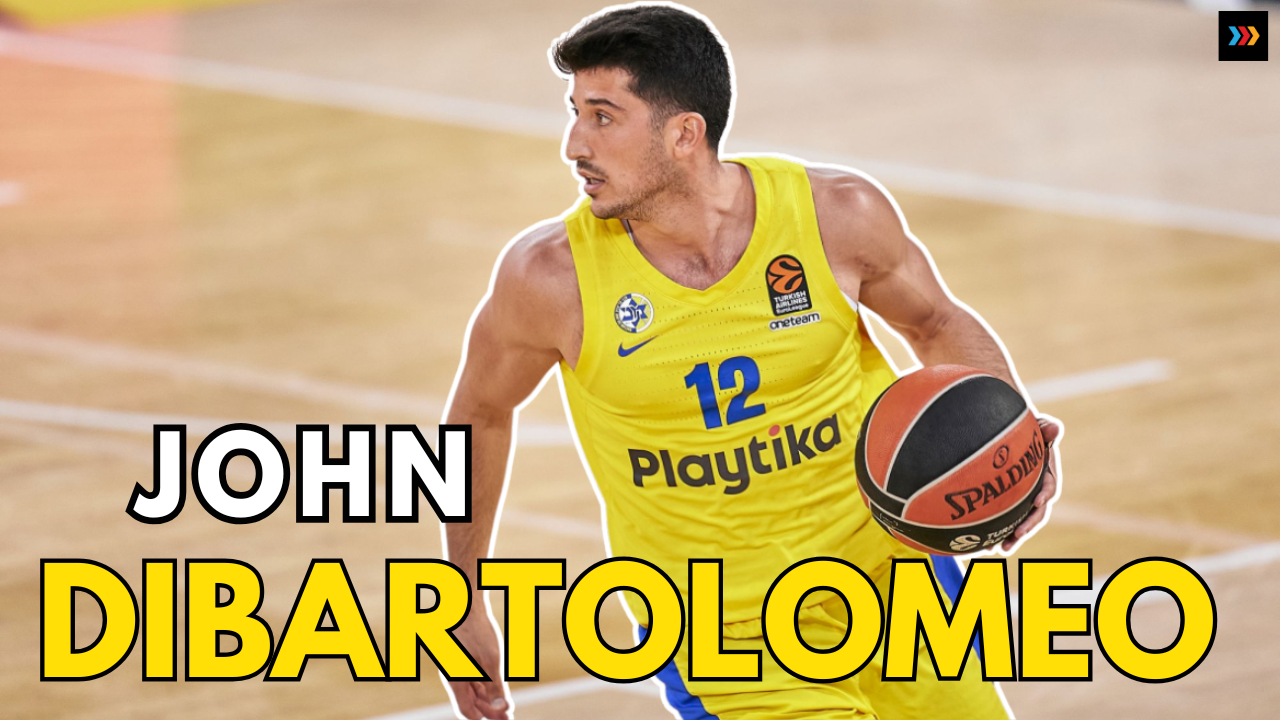
University of Rochester Graduate John DiBartolomeo has had a standout pro career abroad.
A Recruiting Story That Almost Didn't Happen
DiBartolomeo didn't grow up at a basketball powerhouse. Staples High School, he says bluntly, was "not a basketball hub, for sure." His recruiting process came down to just three serious suitors: Union, Dickinson, and the University of Rochester.
"It's not like I had this long list of places; it's not like I took too many visits," DiBartolomeo explained. What separated Rochester from the rest wasn't a flashy pitch, it was consistency. "They were just the most in contact with me, constantly... checking in, inviting me out for visits." A campus visit on a beautiful spring day sealed the deal. "I walked into the gym, and the palestra, I immediately fell in love with."
His advice for recruits evaluating Northeast or Upper Midwest schools: Don't just visit in March or April. "I heard Rochester didn't have the greatest weather, and then I went there, and it was absolutely beautiful, and then I had four years there where I didn't see the sun too much," he laughed. "Still, I wouldn't trade my Rochester experience for anything."
ROTY & a Strong Culture Under Coach Flockerzi
DiBartolomeo started every game as a freshman and won Rookie of the Year — a role he didn't expect, since he thought he'd play behind an upperclassman point guard. A conversation with assistant coach Jim Driggs changed his trajectory: take care of the ball, make your free throws, and you'll get minutes. He did, and he became a starter before he even realized it.
After his freshman season, longtime coach Luke Flockerzi took over the program, and DiBartolomeo says the "control the controllables" mentality Flockerzi instilled has stuck with him for over a decade. "It's so simple, yet so effective," he said. "It's a habit, and you become more disciplined in everything that you do, and it translates to on-the-court, off-the-court stuff." Today, he finds himself repeating the same phrase to his own professional teammates in Israel.
By the time he left Rochester, DiBartolomeo had earned All-UAA First Team honors, D3 All-American recognition, and D3 Player of the Year. All these accolades were hard-earned and would become the foundation for his professional resume.
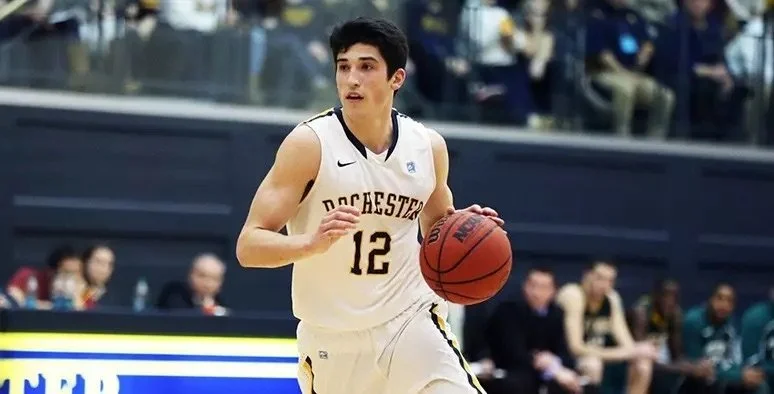
DiBartolomeo during his D3 basketball career at the U of R (Image via Rochester Athletics)
Showcase Camp in Spain & a Surprise 3-Year ACB Deal
DiBartolomeo's path overseas started with a phone call to fellow D3 alum Will Hanley (Bowdoin College Men’s Basketball), who connected him with agents specializing in the Spanish market. His agent steered him toward a showcase camp in Spain; the kind many advised him to avoid due to poor organization and false promises of exposure. This one turned out to be legitimate, and after a strong showing, Real Zaragoza offered him a three-year deal in the ACB, Spain's top division.
The excitement of the offer outpaced the reality of the role. "I was a Zaragoza player, but I wasn't someone they were counting on," he said. Over two preseasons, the club never paid him and eventually sold his rights to Maccabi Haifa. Along the way, he was loaned to a third-division club in Mallorca, where a Spanish teammate, Antonio Pontin, took him under his wing and taught him the basics of independent life abroad. Things like grocery shopping, cooking, and navigating a new culture were all new and having some help was a huge boost. The two remain close friends to this day; Pontin even attended DiBartolomeo's wedding in Israel.
The Real Challenge of Playing Pro Overseas Isn't Basketball
One thing we took away from the conversation: It is remarkable how much of a professional athlete's success depends on what happens away from the court. DiBartolomeo, who now mentors younger players making the same transition, said the basketball adjustment is rarely the hardest part.
"Guys who have good IQs, who have played a lot of basketball, they can typically pick up on it," he said. "I think the more challenging part is handling that off-the-court transition - being alone for the first time, being in a foreign country for the first time, trying to fill your days."
His advice to players signing their first overseas contract: "You're going there to live there. You're not just going there to play basketball... you're gonna need some relief from basketball." In both Spain and Israel, DiBartolomeo leaned on teammates - Antonio Pontin and later Israeli Danish-American veteran Hanan Coleman - to force himself out of his apartment and build a life outside the gym.
Israeli League MVP & the Move to Maccabi Tel Aviv
DiBartolomeo's two seasons with Maccabi Haifa became the turning point of his career. Playing under a defensive-minded, "drill sergeant" coach named Rami Hadar, he developed into a legitimate two-way player for the first time in his career - a reputation that would define his game going forward.
"In my career, I'm far from the most talented player," he said candidly. "I'm not the tallest, quickest, I don't even have the highest IQ. A large reason I'm able to get on the floor is I'm coachable... I play with a lot of energy."
A statement 91-56 win over Maccabi Tel Aviv, in which DiBartolomeo scored 22 points, helped put him on the radar of the EuroLeague giant. He was later named Israeli League MVP with Haifa, and shortly after, signed with Maccabi Tel Aviv - a move that has now produced numerous trophies, tournament MVP honors, and All-League selections.
Passport Lesson for Every D3 Player Chasing a Pro Career
One of the most practical takeaways for aspiring pro athletes: Your citizenship matters. DiBartolomeo's mother is Jewish, which allowed him to obtain an Israeli passport through Aliyah - the right of return available to Jewish people worldwide. At the time, Israeli League rules always required two Israeli players on the court, so holding local status opened roster spots that would otherwise go to another import.
"When you just have the American passport, the job market... it is much tougher," he explained. "If you have a European passport, an Israeli passport, it gives you a couple more slots on each team where you can possibly get your foot in the door." He encourages players to research their own family history. Having a European grandparent or Jewish heritage can open doors most recruits never consider.
Advice for His 18-Year-Old Self
Last season, DiBartolomeo and longtime teammate Jake Cohen were honored for playing 500 games together - the most games he's played alongside any teammate professionally. "Jake is way more than a teammate at this point," he said. "We'll be friends for life."
When asked what advice he'd give his 18-year-old self back at Staples High School, DiBartolomeo didn't hesitate: "Enjoy the ride, enjoy college, enjoy everything about it... In a heartbeat, I think I would give all that up to go back and do another four years of college." It's a rare perspective from someone who has spent a decade playing at the highest levels of European basketball, and a reminder to current D3 student-athletes to savor the experience while it lasts.
The Bigger Picture for D3 Athletes
DiBartolomeo's story is proof that a professional basketball career doesn't require a blue-blood program or a five-star recruiting profile. It requires work ethic, coachability, and a willingness to lean on the network of D3 alumni who've walked the same path before. As he put it: "I don't end up where I am without my friends, my connections, my family... everyone kind of helped out."
For current and aspiring D3 basketball players, his message is clear: reach out, build relationships, and don't be afraid to bet on yourself - even if your path starts at a school that's never made a top programs list.